
Glencolumcille Folk Village is about an hour from Donegal town, in a pretty remote part of County Donegal. It was an idea started by the local parish priest about 50 years ago when he arrived to find very little infrastructure in this poor and remote area. The area didn’t even have running water until the late 1960’s! Fr. James McDyer designed and oversaw the building of the little village as a type of museum to draw in tourists and business to the area. The local people volunteered their time and talent to help in building, and even donated all of the items in the cottage museums.

When we arrived, the parking lot was filled with vintage cars. So cool!
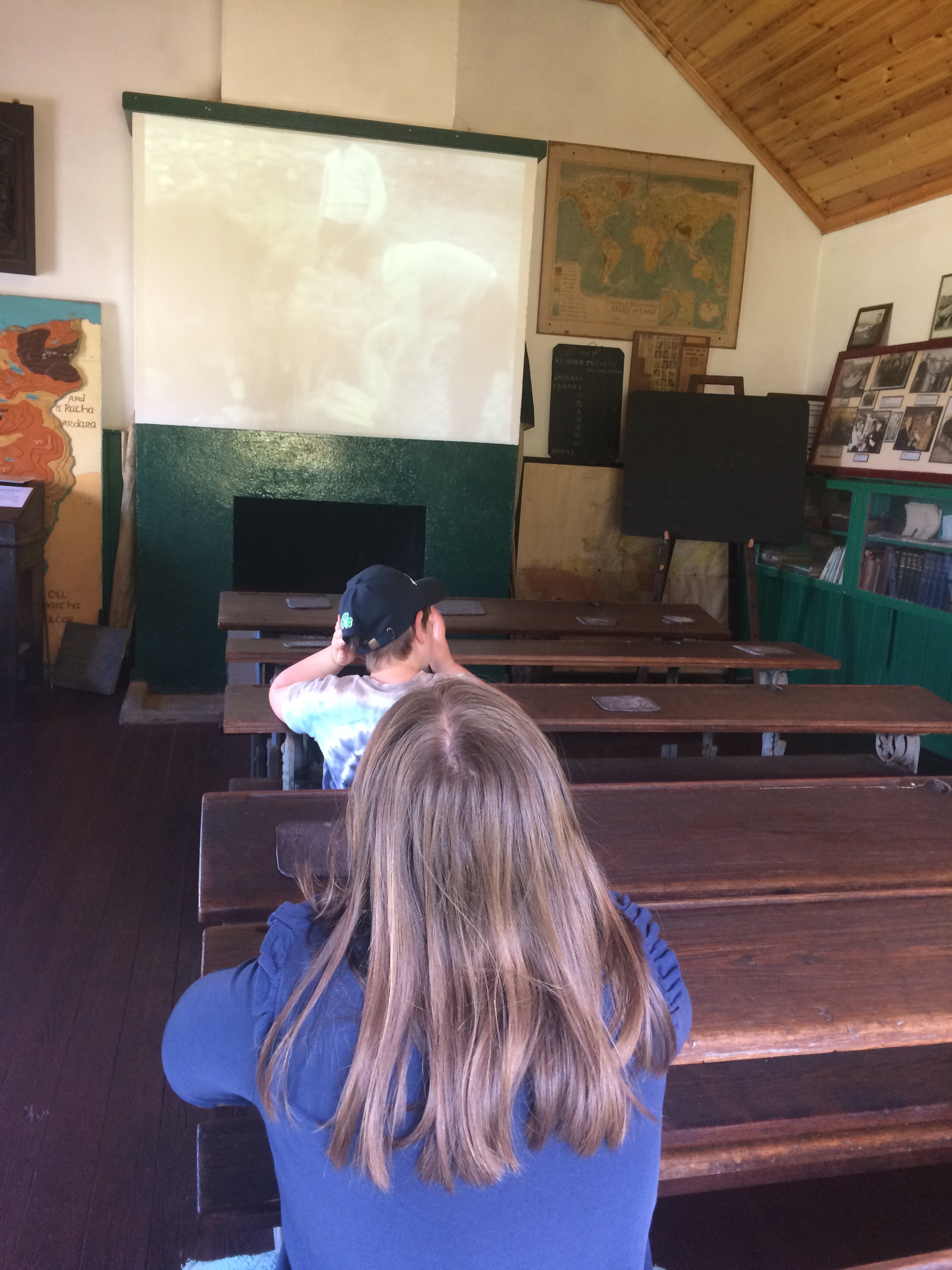
The first cottage in the village was a replica schoolhouse, and inside were desks complete with inkwells. They were playing a very old movie in which Fr. McDyer himself talked about the building of the living-history museum village.
The largest of the thatched roof cottages gave a chronological history of the local area, from stone burial mounds to the Bronze Age to the arrival of Christianity in the 500’s when St Columcille is believed to have arrived looking for a quiet place for contemplative prayer. A small village grew, the local people farmed and fished, and became known for their excellent woolen knits. The potato famine affected the village, but not as much as it did the rest of the country, and they lost about 10% of their small population.
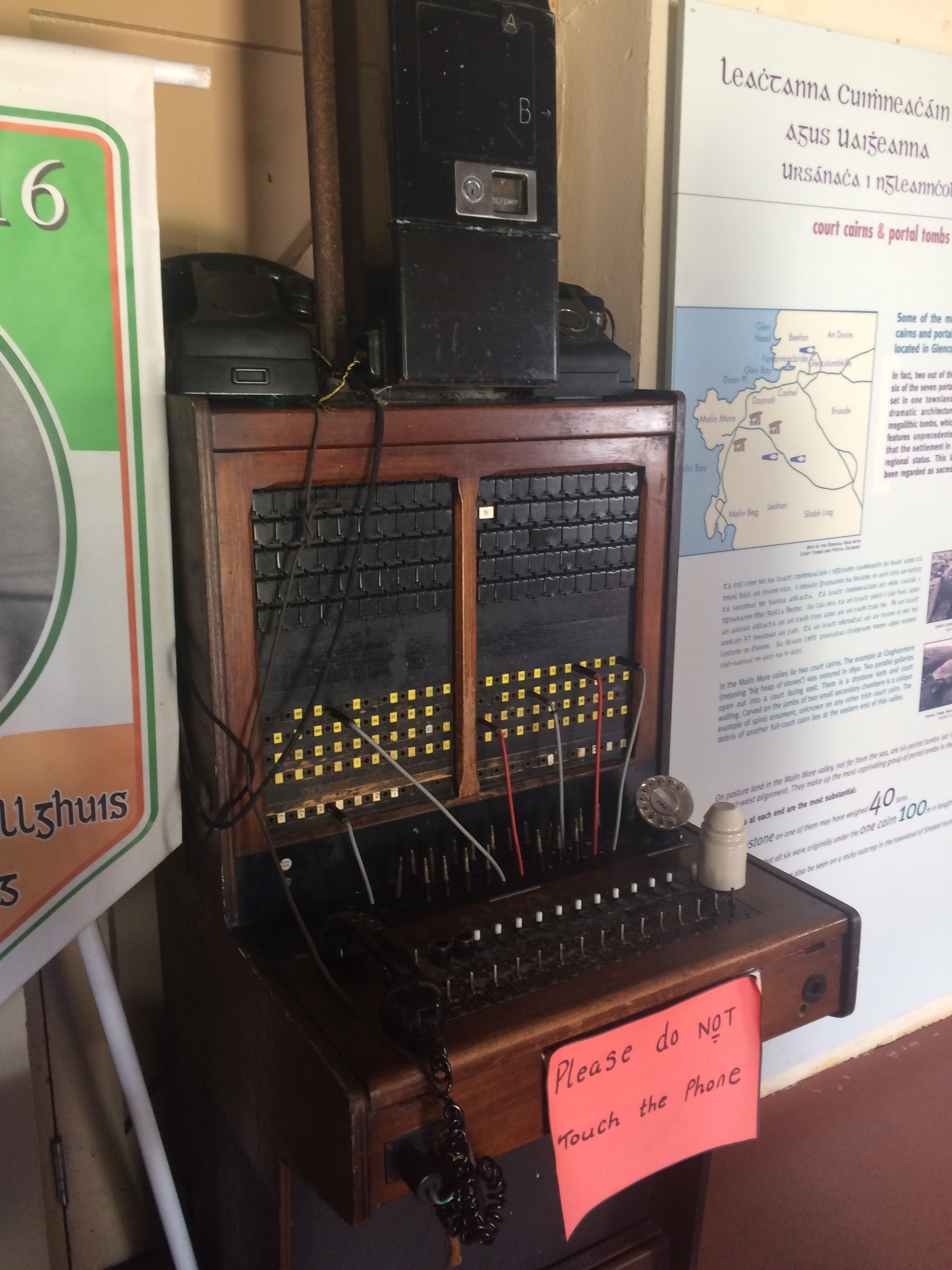
Modernity came to the village much later than it did to most of Ireland. They were one of the last places on the island to get electricity and phone service, and as I mentioned above, running water didn’t arrive until the late 60’s. This is a real switch board, although there was no indication of how long it remained in use.

This photo gives you an idea of the layout of the village. There were 7 cottages in total. To show visitors what life was like in the area, they made a 1700’s cottage, an 1800’s cottage, and a 1900’s cottage, plus the school room, the history cottage, the fisherman’s cottage, and a shop/pub. Then there were also a modern tea room and gift shop.
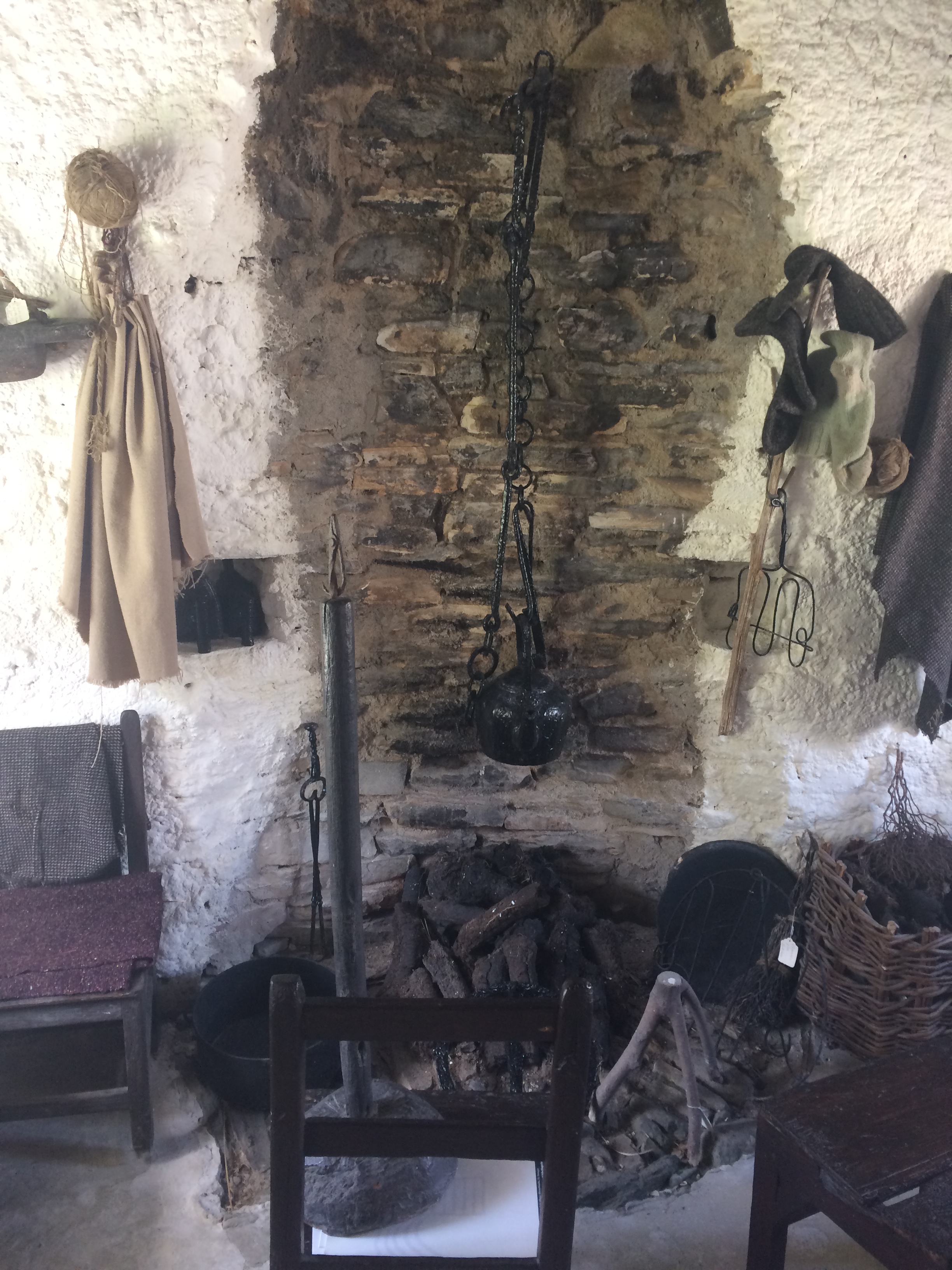
We took a lot of pictures, and I’m having trouble keeping them straight, but I think this was the 1700’s cottage. It was just one room, very sparsely furnished.
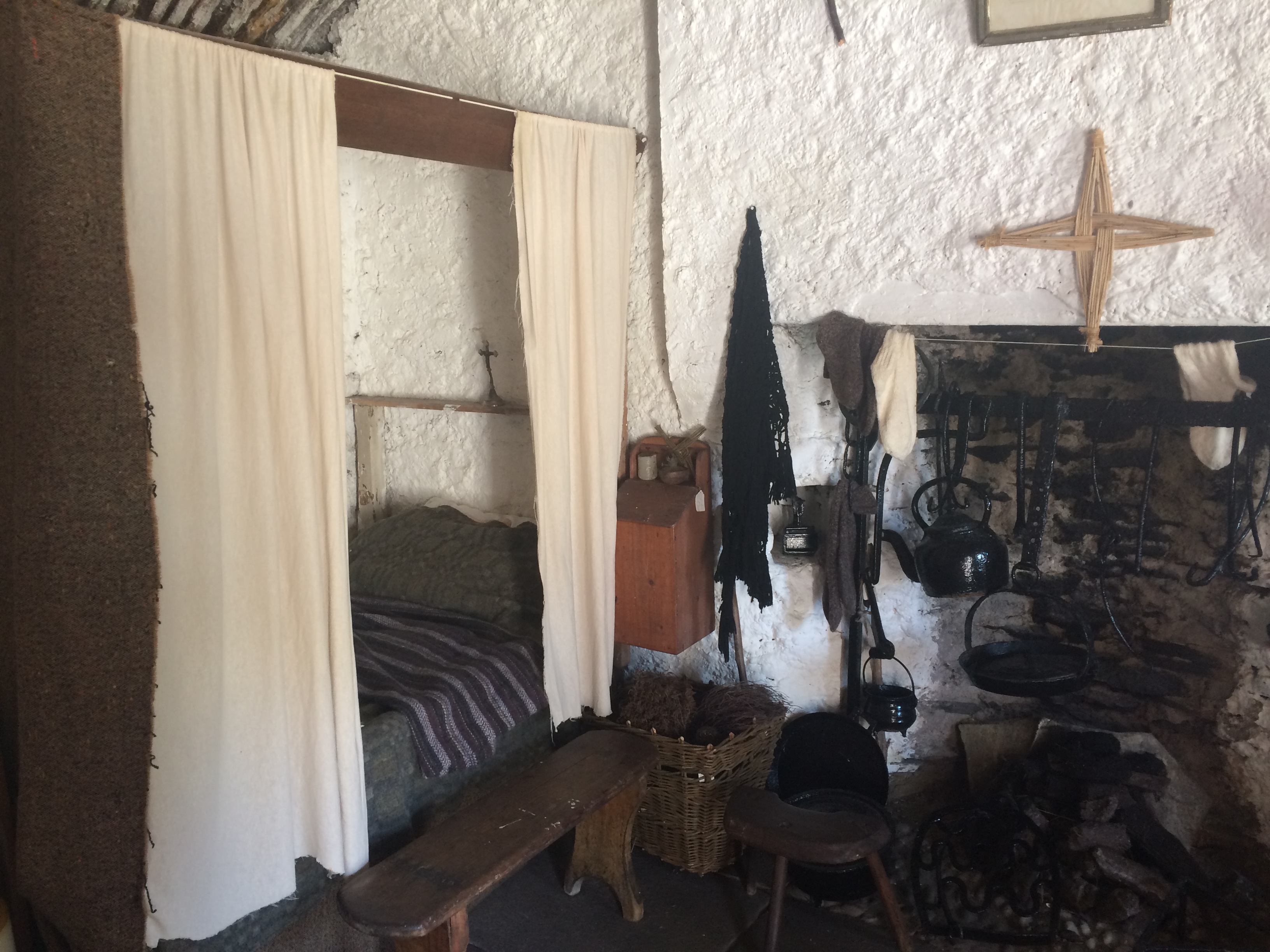
The 1800’s cottage was a little bigger, with a larger fireplace and more furniture.

The 1900’s cottage had 3 rooms and noticeably more furniture.

It even had a fancy parlor, with a wood floor, while the other rooms had stone floors.

This tiny cottage was the shop on the right side, and the pub on the left side.
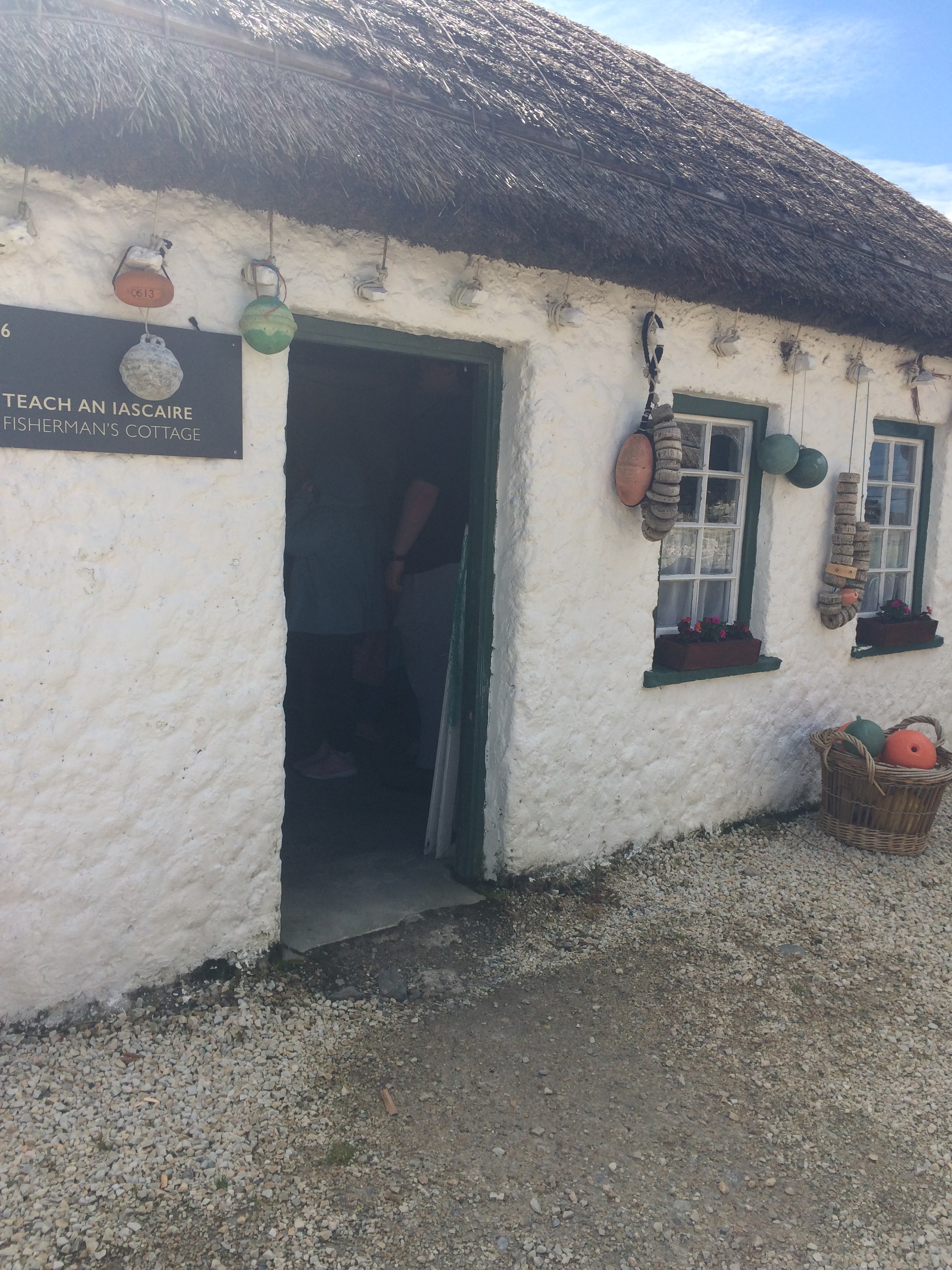
The fisherman’s cottage, complete with nets and buoys. Look at the sign to the left of the door. This part of the country (along with a small part of County Kerry) is called “An Gaeltacht” which means it is known for still widely using and speaking Irish. All of the signs are in Irish first and then in English (every once in a while just in Irish).
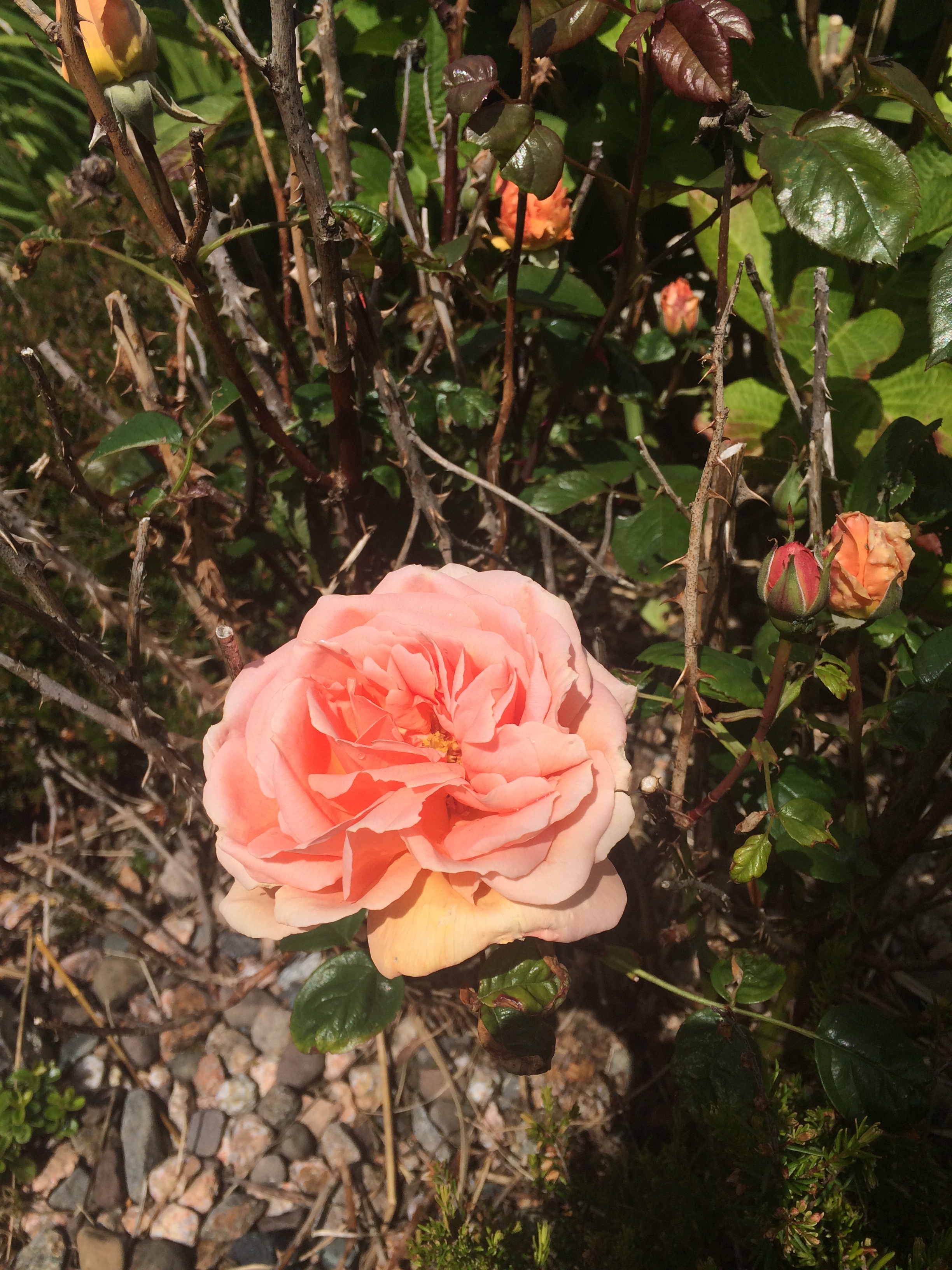
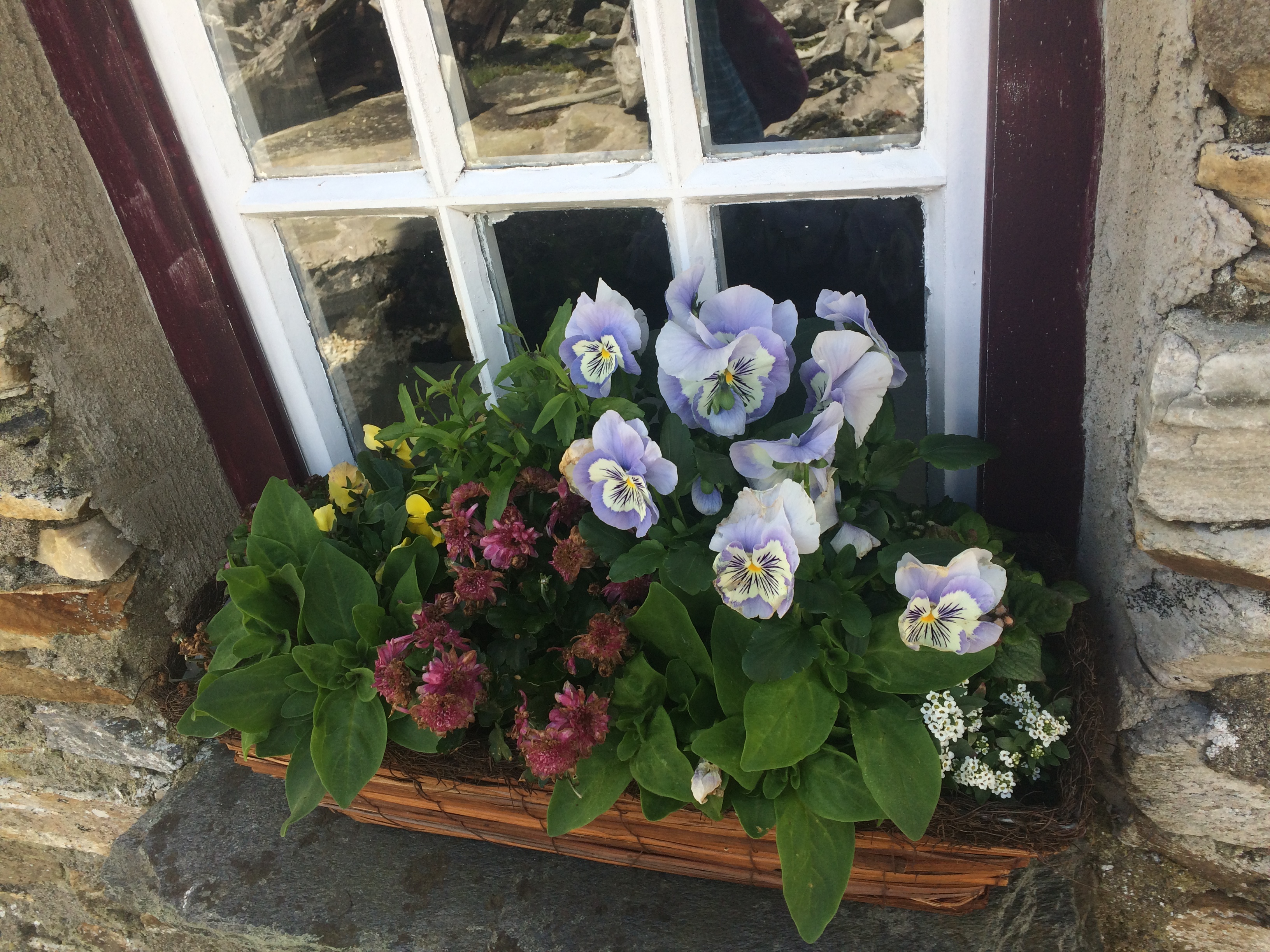
You know I can’t resist taking pictures of the flowers!
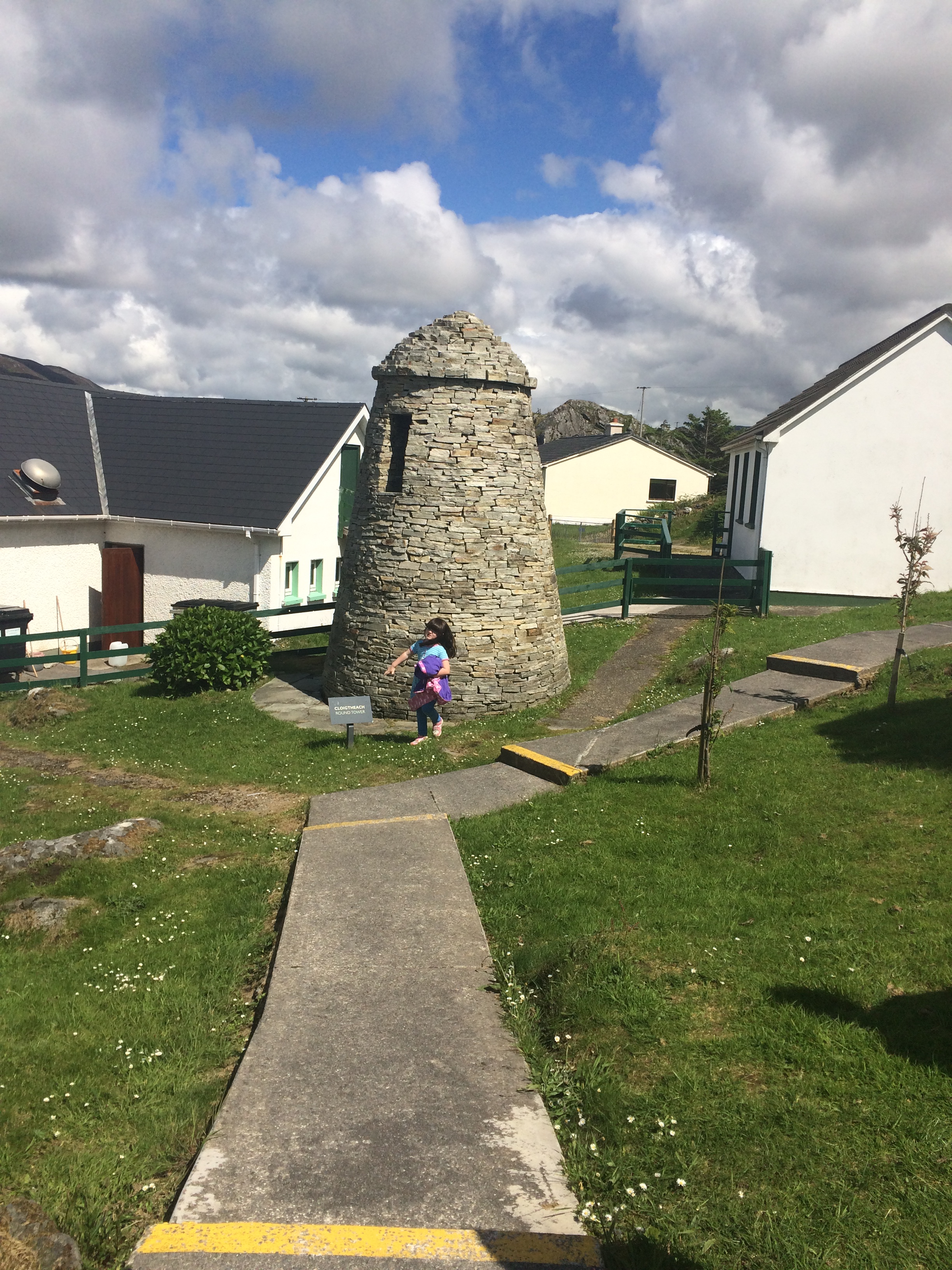
The round tower, a replica of taller towers in the area that were built as look-outs.
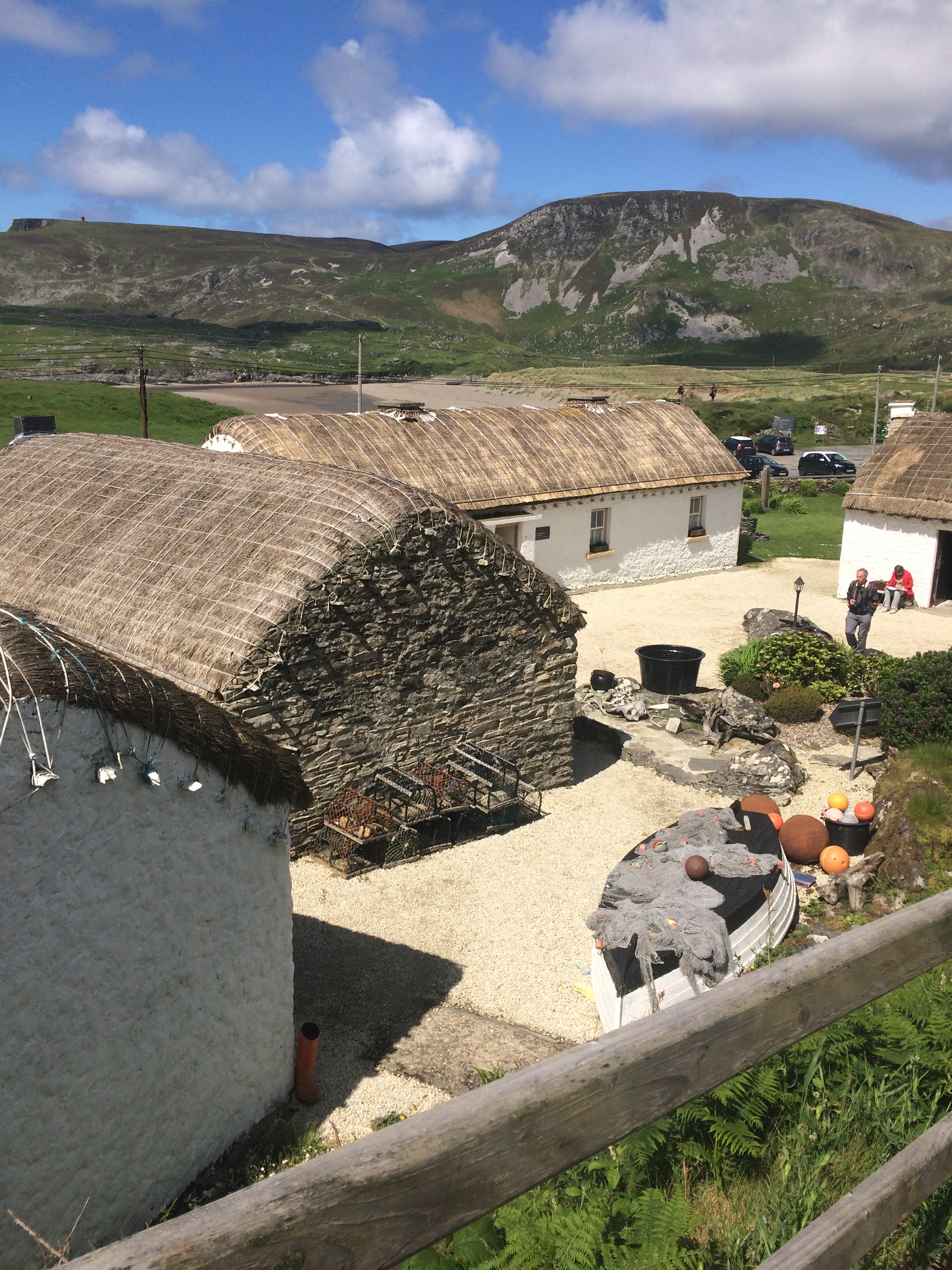
Looking down at the village from the path up the hill.
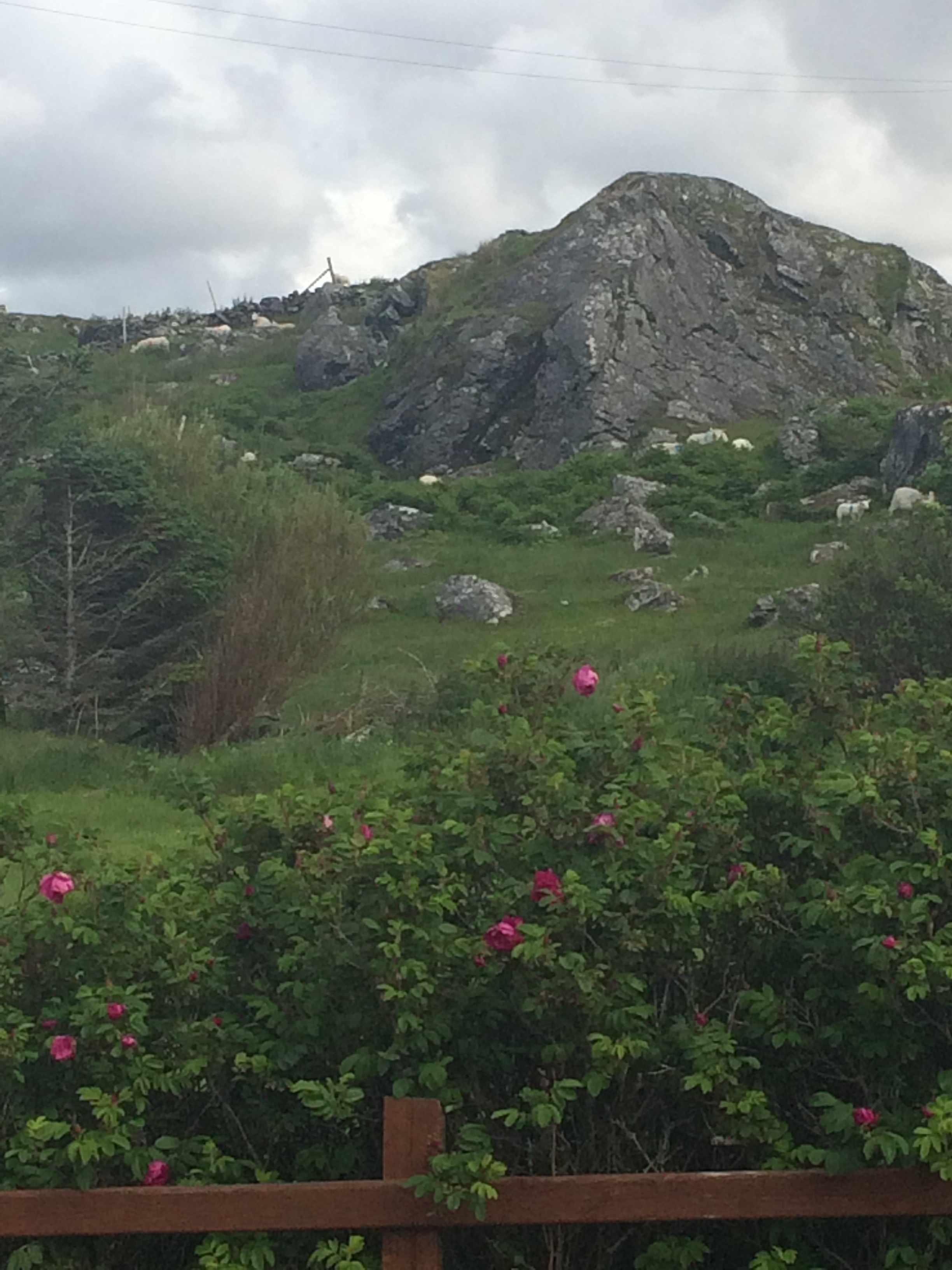
Flowers lining the path up the hill

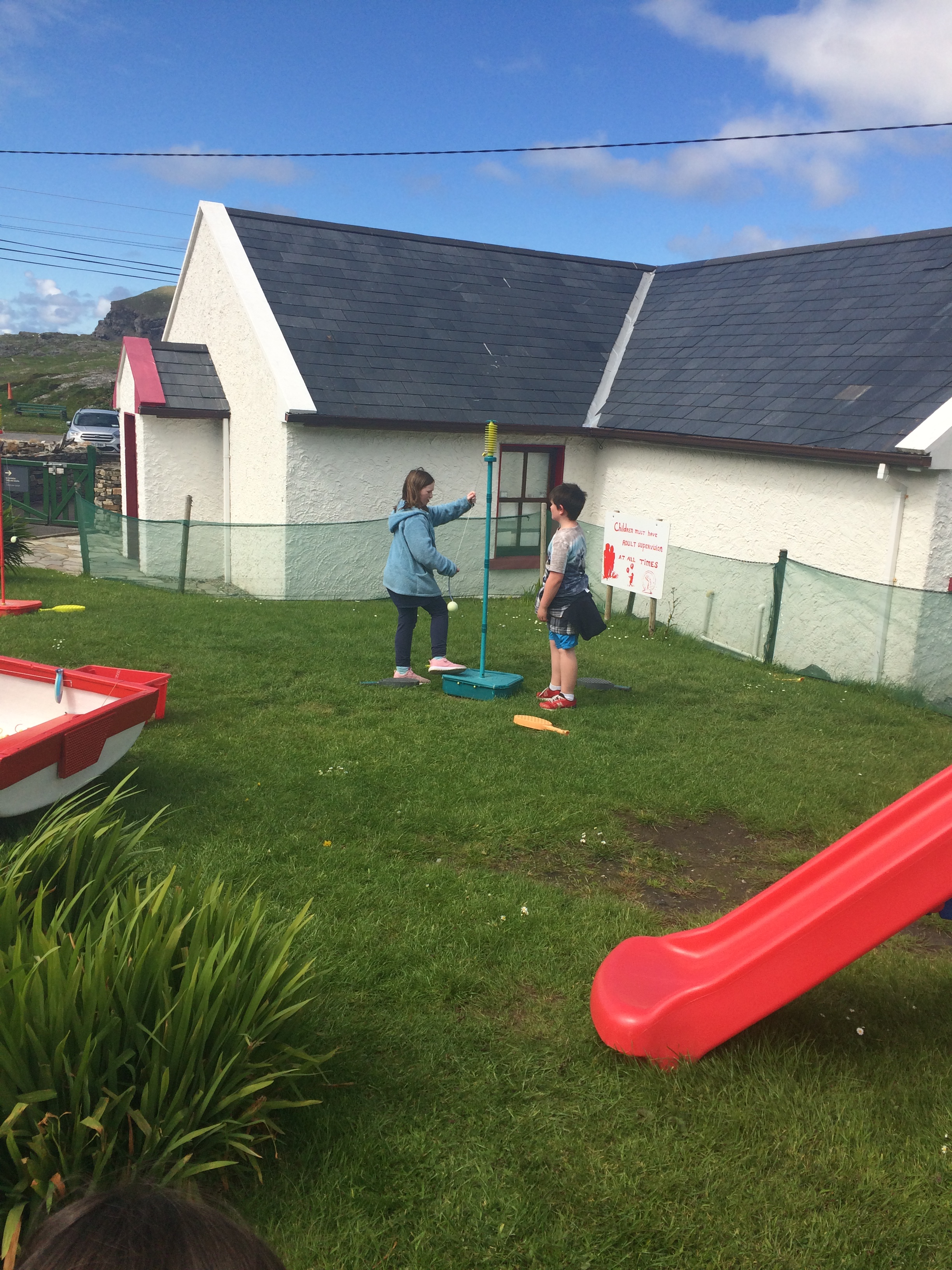
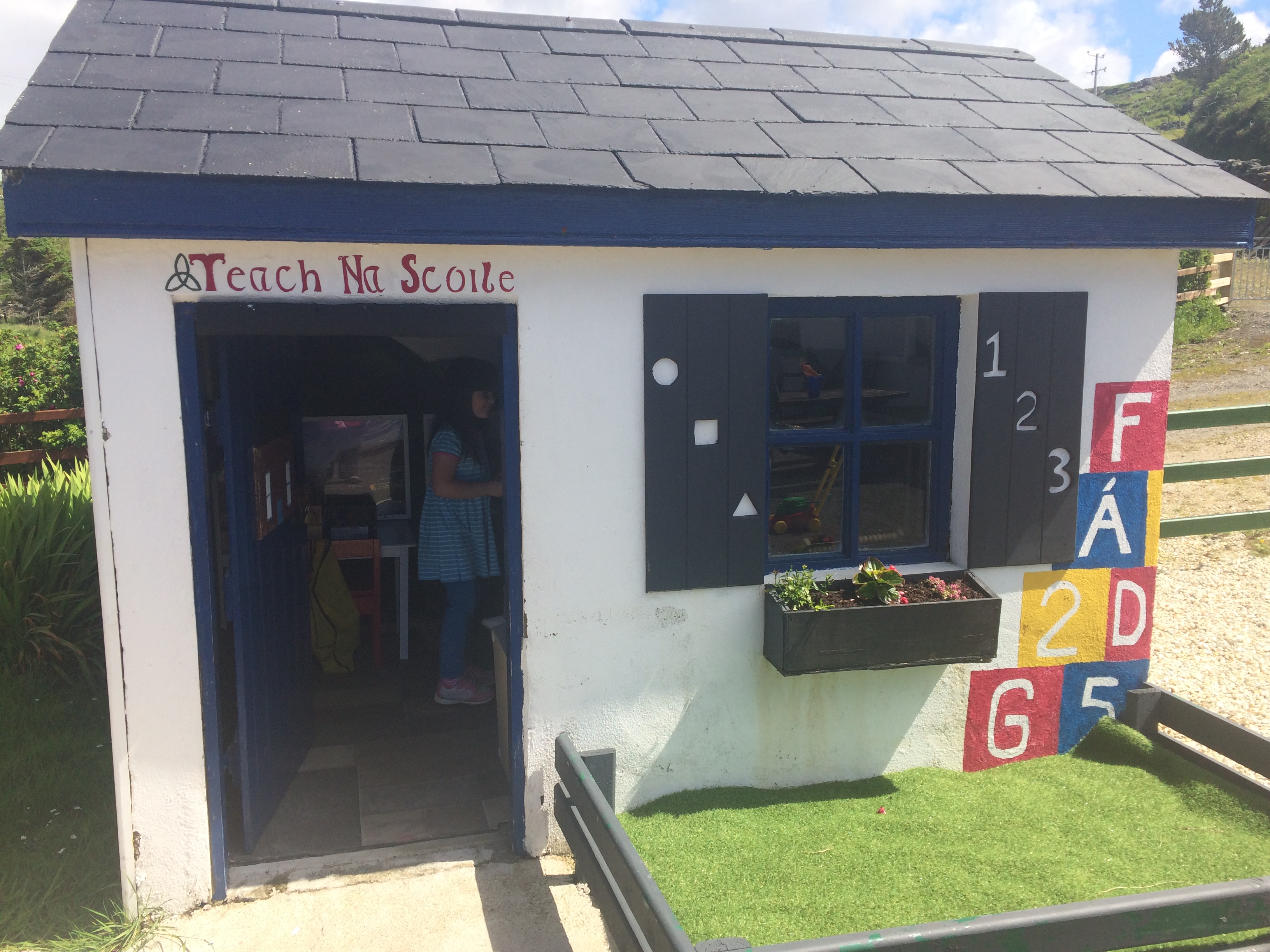
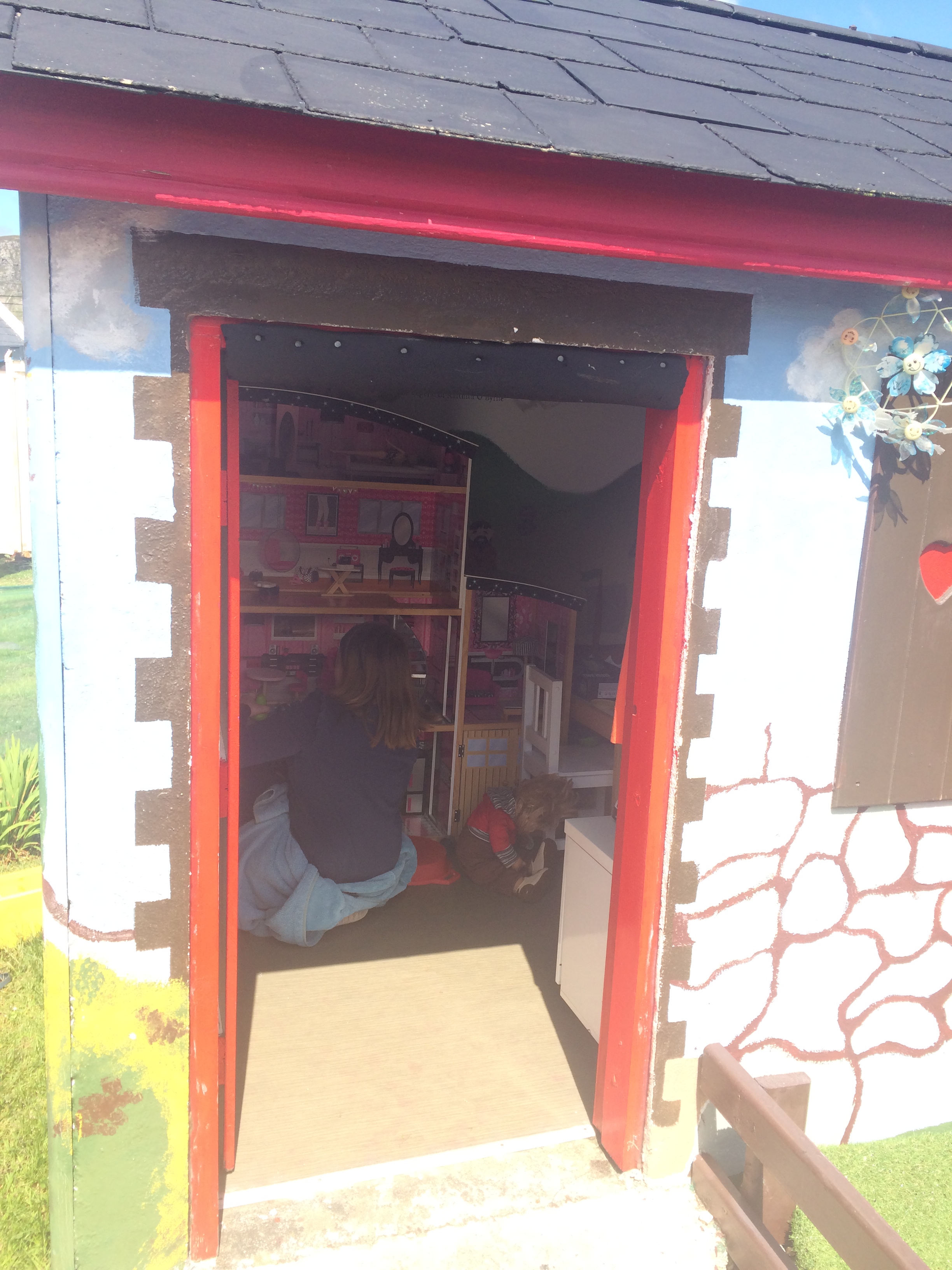
Outside the tea room there was a play area for the kids. They had built small houses to resemble the school room and one of the thatched cottages. There was even a gazebo with a tiny picnic table for the kids to sit in, and a small wooden fishing boat.

The tea house where we went for lunch.

Before heading back to the car, we followed the path down towards the beach.

We had fun and learned a lot on this beautiful day!
 Brogans Across the Pond
It is so remote, yet the cottages are so close together! You had better have *loved they neighbor* !
LikeLike